Rosicrucian Park, Part 2
Feb. 19th, 2008 12:37 pm![[personal profile]](https://www.dreamwidth.org/img/silk/identity/user.png) dragoness_e
dragoness_ePart 1 is back here.
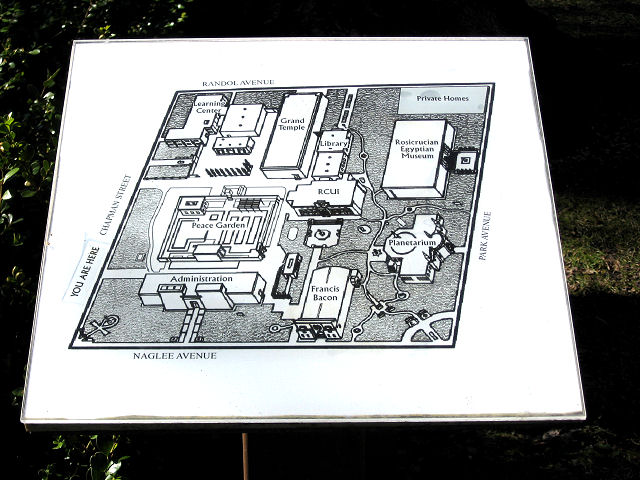
The Akhnaton Shrine is located between the Administration building and the Francis Bacon Auditorium on the map, though it's not marked as such. The area is gated and closed to non-Rosicrucians, but it's a small open-air temple and the whole thing is visible from outside the gate. It looks nifty.
Entrance to the Shrine

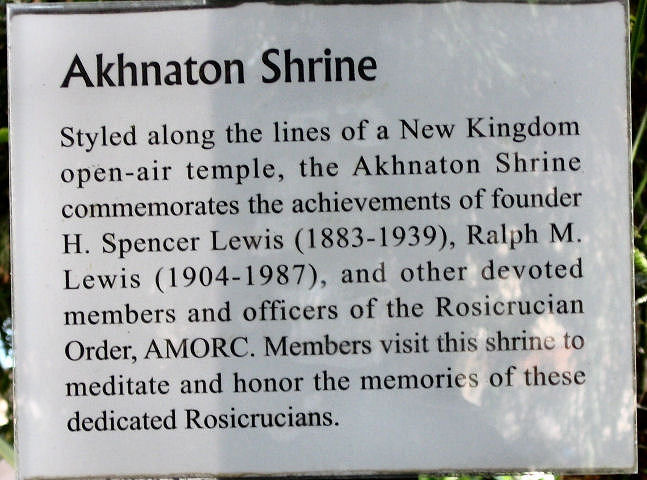
-- Sign at entrance gate to shrine
Front view of the shrine

Bed of Papyrus

Here's what really grabbed me: there's a bed of papyrus alongside the shrine. Real, live, Egyptian papyrus plants. Now I have a better idea of what all those waving reeds in tomb paintings are like in real life. This stuff once grew in profusion in the Nile Delta and along the river banks; it's what the Egyptians made paper from, reed canoes, many other things. It is found as a recurring motif in Egyptian art and religious symbolism, just as many flowers appear in Western art and symbolism.
Close-up of Papyrus heads

Tall bed of Papyrus screening the shrine

Imagine the sidewalk was actually water and you were sitting in a canoe paddling by stands of this stuff; capture a little bit of the flavor of ancient Egypt.
Past the Akhnaton shrine and around the corner (I'm skipping the library pictures for now) is the Peace Garden. Unfortunately, the dead of winter is not a good time to see the Peace Garden, as it is quite barren and forlorn-looking right now. One might want to see it in the spring or early summer; supposedly it is planted with the flowers and plants found in an 18th dynasty temple garden. I took a few pictures of architectural features; I really like the Egyptian revival decor.
Pavillion

Garden pool

A standard feature of Egyptian gardens, based on tomb paintings and excavation.
Shrine, from inside

There's a small shrine-type building in the garden as well. Here's a shot from inside.
Next: Rosicrucian Library
The Akhnaton Shrine is located between the Administration building and the Francis Bacon Auditorium on the map, though it's not marked as such. The area is gated and closed to non-Rosicrucians, but it's a small open-air temple and the whole thing is visible from outside the gate. It looks nifty.
Entrance to the Shrine
"Styled along the lines of a New Kingdom open-air temple, the Akhnaton Shrine commemorates the achievements of founder H. Spencer Lewis (1883-1939), Ralph M. Lewis (1904-1987) and other devoted members and officers of the Rosicrucian Order, AMORC. Members visit this shrine to meditate and honor the memories of these dedicated Rosicrucians."
Front view of the shrine
Bed of Papyrus
Here's what really grabbed me: there's a bed of papyrus alongside the shrine. Real, live, Egyptian papyrus plants. Now I have a better idea of what all those waving reeds in tomb paintings are like in real life. This stuff once grew in profusion in the Nile Delta and along the river banks; it's what the Egyptians made paper from, reed canoes, many other things. It is found as a recurring motif in Egyptian art and religious symbolism, just as many flowers appear in Western art and symbolism.
Close-up of Papyrus heads
Tall bed of Papyrus screening the shrine
Imagine the sidewalk was actually water and you were sitting in a canoe paddling by stands of this stuff; capture a little bit of the flavor of ancient Egypt.
Past the Akhnaton shrine and around the corner (I'm skipping the library pictures for now) is the Peace Garden. Unfortunately, the dead of winter is not a good time to see the Peace Garden, as it is quite barren and forlorn-looking right now. One might want to see it in the spring or early summer; supposedly it is planted with the flowers and plants found in an 18th dynasty temple garden. I took a few pictures of architectural features; I really like the Egyptian revival decor.
Pavillion
Garden pool
A standard feature of Egyptian gardens, based on tomb paintings and excavation.
Shrine, from inside
There's a small shrine-type building in the garden as well. Here's a shot from inside.
Next: Rosicrucian Library